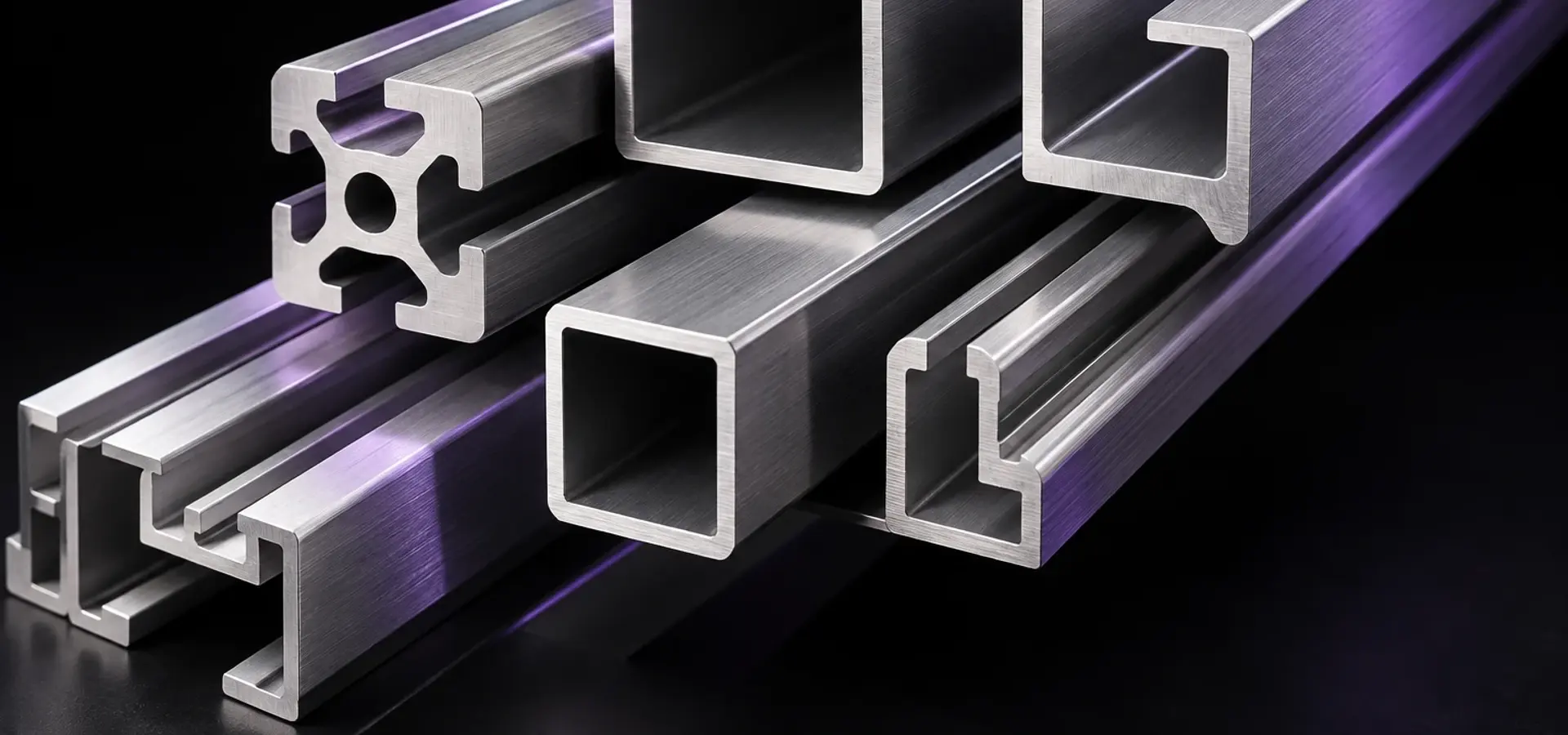
Aluminium in electrical and electronics
Heat sinks, enclosures, busbars, LED channels and cable management — the thermal and electrical properties that drive the section, and the alloys each one calls for.
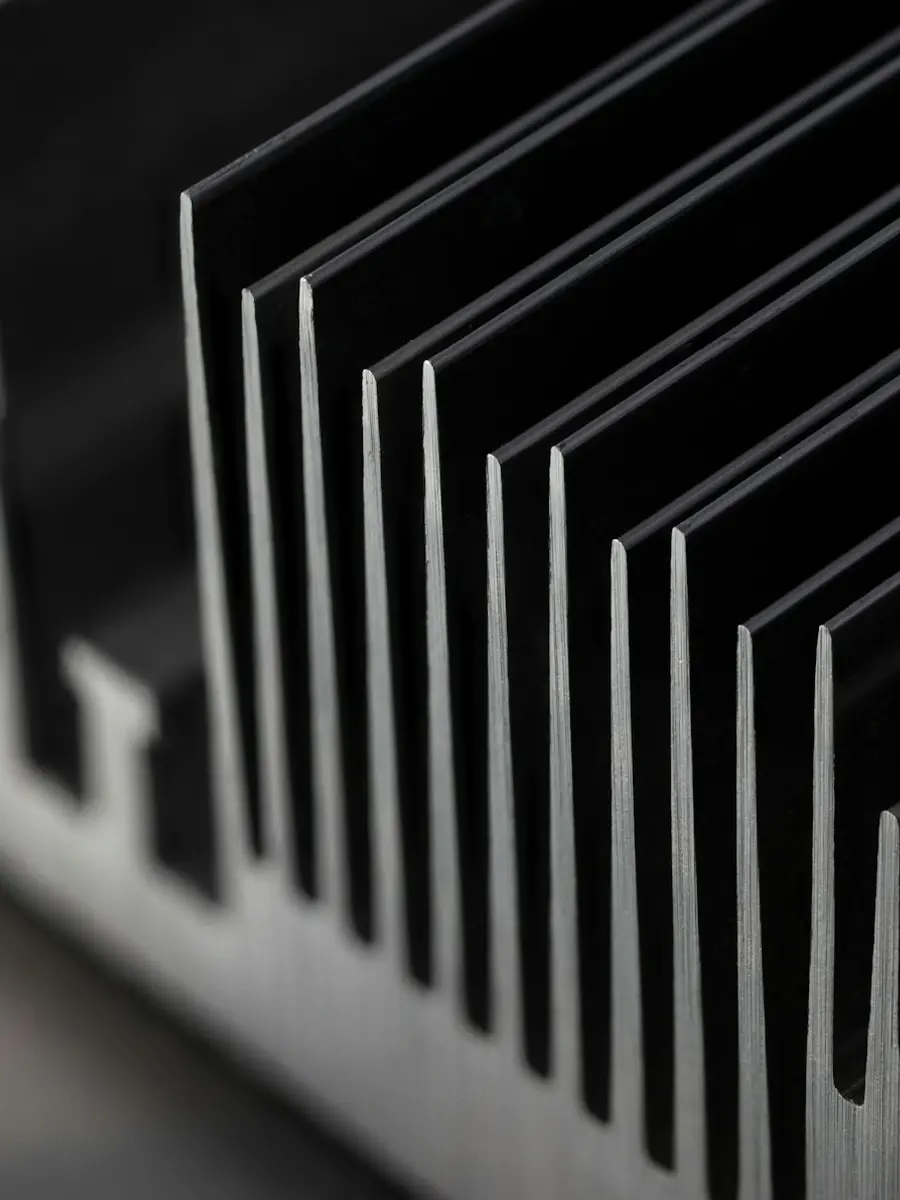
Electronics fail on heat. An extruded heat sink is the most economical way to turn a few hundred grams of metal into a large surface area, which is why almost every power device sits on one.
The same process serves the rest of the cabinet: the enclosure, the busbar carrying the current, the channel the LED strip sits in, the tray the cables run through.
Electrical & Electronics at a glance
- Governs the choice
- Thermal conductivity near 200 W/m·K, and electrical conductivity on a busbar
- Usual alloys
- 6063 for finned heat sinks; 6101 or 1350 where current is the duty
- Usual finish
- Black anodise on visible sinks; anodise or powder coat on enclosures
- Design input
- Watts to dissipate, air flow and ambient — not a fin drawing
Why aluminium suits electrical & electronics
It moves heat
Aluminium conducts heat at roughly 200 W/m·K — an order of magnitude better than stainless steel — and extrusion is the only economical way to produce the tall, thin, closely-pitched fins that turn conductivity into dissipation.
It conducts current at low weight
Per kilogram, aluminium carries more current than copper. On a long busbar run or a substation, that weight and cost difference is the reason the specification says aluminium.
It shields and does not magnetise
A continuous aluminium enclosure attenuates electromagnetic interference, and the metal is non-magnetic, so it can sit next to sensitive instrumentation without distorting it.
Aluminium sections used in electrical & electronics
Extruded parts this sector asks for, and the families each one is drawn from.
- Extruded heat sinks, plain and cross-cut fin
- Electronic and instrument enclosures
- Busbars and conductor sections
- LED channels and diffuser carriers
- Cable trays, ladders and trunking
- Switchgear and panel framing
- Motor and drive housings
- Antenna and mounting profiles
Sections this work draws on
See the full rangeWhat a quote actually depends on
Four answers turn an enquiry into a price. The rest can be worked back from the duty.
- Alloy
- 6063 for heat sinks — it extrudes into fine fins and conducts well. 6101 or 1350 where electrical conductivity is the governing property, as on a busbar.
- Fin geometry
- Fin height against gap is limited by what the die can fill; a very high aspect ratio is possible but affects tooling and rate. Send the thermal requirement and let the die design resolve it.
- Finish
- Black anodising slightly improves radiative dissipation and is the convention on visible heat sinks. Enclosures are usually anodised or powder coated for handling and appearance.
- Machining
- Most of these parts are extruded, then cut, drilled and tapped. Saying what happens after extrusion changes how the section should be designed.
Where these sections go wrong
A tall fin is not a free fin
Fin height against gap is limited by what the die can fill. Past roughly ten to one the tooling, the extrusion rate and the price all move, so send the thermal duty and let the die design settle the geometry.
Anodising is an insulator
The oxide layer does not conduct. Busbar contact faces, earth bonding points and any joint that has to carry current must be masked off or stripped back, then protected.
The base spreads before the fins dissipate
A thin base plate under a concentrated device throttles the whole sink no matter how much fin area sits above it. Base thickness is part of the thermal specification, not what is left over.
Questions this work raises
What buyers specifying electrical & electronics sections ask before they send a drawing.
Fin height is limited by the ratio of height to the gap between fins, because the die has to fill that gap. Around ten to one is comfortable; beyond it the tooling, the extrusion rate and the price all move. Send the watts to dissipate, the air flow and the ambient, and the geometry can be worked back from the duty.
6101 or 1350, because conductivity is the governing property rather than strength. 6063 is used where a conductor also has to hold a shape. Per kilogram aluminium carries more current than copper, which is why long runs and substation work specify it.
Black anodising slightly improves radiative dissipation and is the convention on visible sinks. It also insulates: the oxide layer does not conduct, so any contact face, earth bond or current-carrying joint has to be masked before anodising or stripped back afterwards.
Let’s build the right solution for you
Send a drawing, a sample or just the application. We design the die and extrude the profile around it.
Common questions
Yes — that is what the plant was built for. Send a cross-section, a sketch or a sample and we design the die around your application.
The application, the section and the quantity. If you already have a drawing, send the dimensions with it.
Yes. Angles, channels, flat bars, tubes and T-sections, alongside architectural and window sections.
Send a sample or a cross-section of the existing part. Matching an established profile is a die design job like any other.
Access equipment — aluminium ladders, scaffolding and FRP ladders.
Send us your requirement
Name, number and what you need. That is enough to come back to you with something useful.