Aluminium in furniture and interiors
Handleless cabinet rails, LED channels, partition frames and edge trims — profiles read at arm's length, where the finish has to match batch to batch.
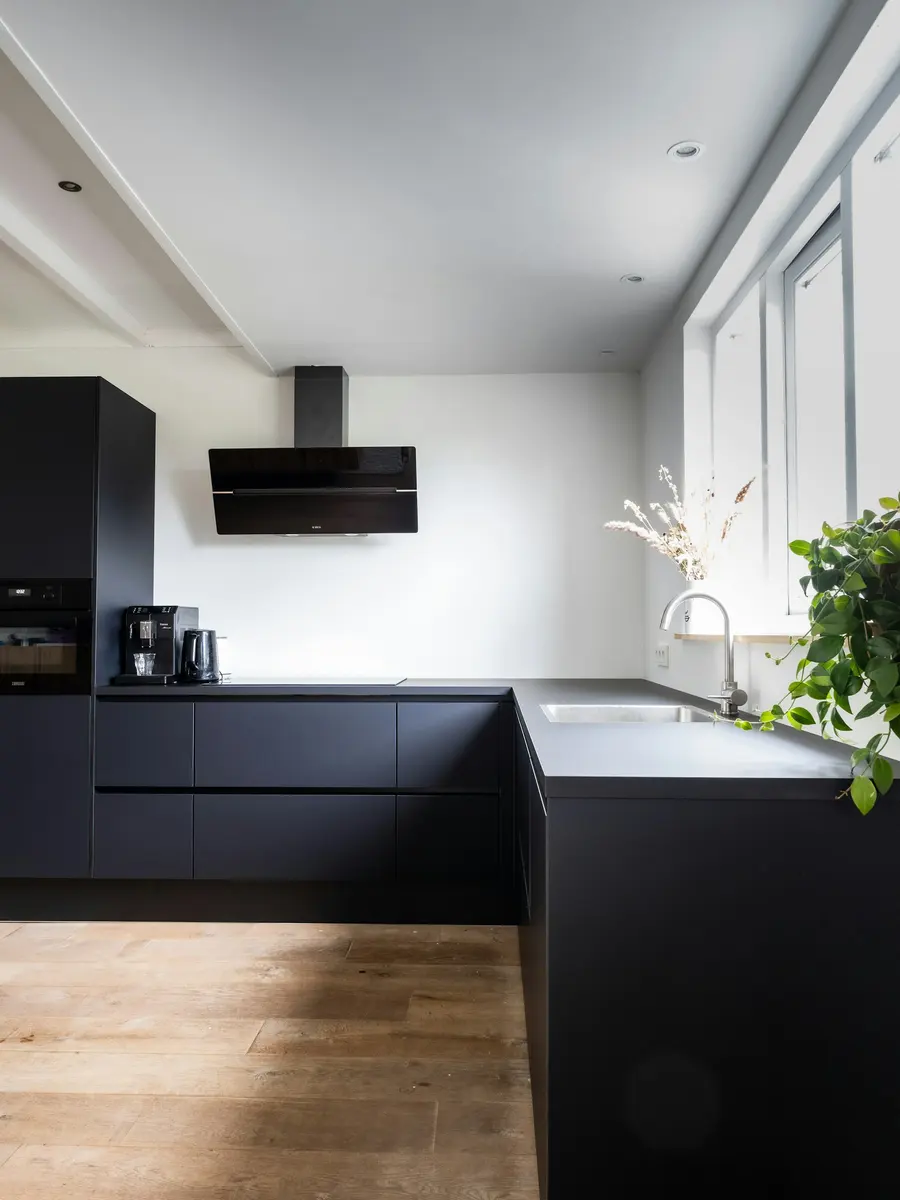
Interior work is judged at arm's length, which is a harder test than a facade at thirty metres. The profile has to be dimensionally consistent, the finish has to match batch to batch, and the sightline has to be as slim as the designer drew it.
Extrusion suits that: a handleless kitchen rail, an LED channel and a partition frame are all thin sections with a decorative face and a functional back, produced in one operation.
Furniture & Interior at a glance
- Governs the choice
- Surface quality and finish consistency at close range
- Usual alloy
- 6063, almost always — it is the alloy that anodises evenly
- Usual finish
- Anodised silver, black or champagne; powder coat, including wood effect
- Design input
- Which face is visible, the finish reference, and the cut module
Why aluminium suits furniture & interior
Slim sightlines
Aluminium's stiffness lets a partition frame or a cabinet rail be visually thin and still hold a panel of glass. The same detail in timber or steel is either thicker or heavier.
The finish is repeatable
Anodising and powder coating give a consistent surface across a run, which is what allows a fit-out delivered over several months to look like one job.
The function hides behind the face
A single section can present a clean visible edge while carrying a gasket race, an LED seat and a fixing channel out of sight. That is the reason these parts are extruded rather than assembled.
Aluminium sections used in furniture & interior
Extruded parts this sector asks for, and the families each one is drawn from.
- Handleless cabinet rails — J, C and gola profiles
- LED channels and diffuser carriers
- Glass partition and door frames
- Shopfitting and display systems
- Worktop, edge and transition trims
- Wardrobe and sliding door tracks
- Skirting, shadow gap and coving profiles
- Table and furniture leg sections
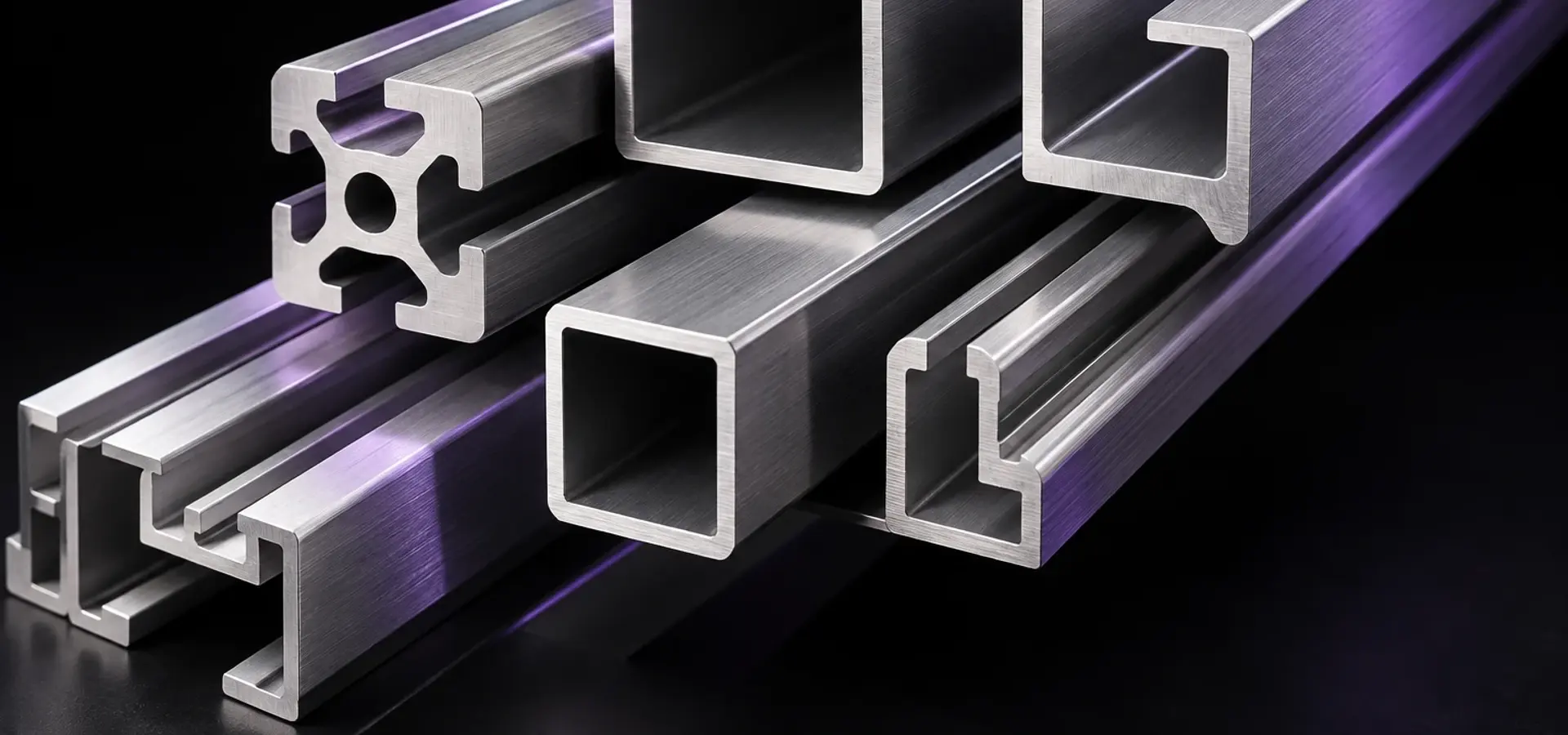
Sections this work draws on
See the full rangeWhat a quote actually depends on
Four answers turn an enquiry into a price. The rest can be worked back from the duty.
- Alloy
- 6063 almost always — it is the alloy that anodises evenly, which on a visible interior profile is the whole specification.
- Finish
- Anodised silver, black or champagne; powder coat for a colour match; wood-effect powder coat where the profile has to disappear into a timber run. Name the reference you are matching to.
- Visible face
- Mark which face is seen. It determines where the die's flow marks and the extrusion witness lines are allowed to fall, and it is the single most useful note on an interior drawing.
- Lengths
- Interior runs are usually cut to a module. Stock lengths plus your own cutting is cheaper on a large fit-out; cut-to-length is cheaper on a small one.
Where these sections go wrong
Mark the visible face
The die's flow lines and the extrusion witness marks have to fall somewhere. If the drawing does not say which face is seen, that decision gets made in tooling, and it cannot be reversed afterwards.
Two finishes will not match
An anodised part and a powder coated part in the same nominal colour read as a mistake side by side. Keep one visible run on one process, and match batches within it.
A slim section will not stay straight on its own
Long thin profiles need straightening, support in transit and care in fitting. Where the sightline is the point, state the straightness that matters rather than a length tolerance.
Questions this work raises
What buyers specifying furniture & interior sections ask before they send a drawing.
A handleless cabinet rail: a section that runs along the edge of a door or drawer and gives a finger pull, so no handle is fitted. J, C and gola are the common shapes, and each is a thin extruded section with a decorative visible face and a fixing channel hidden behind it.
Yes. Wood-effect powder coating is a sublimation process over a base coat, and it is how a profile disappears into a timber run. Name the reference you are matching to, and keep every visible part of a run on the same process — an anodised part and a coated part in the same nominal colour will not match.
6063. It is the alloy that takes an even anodic film along a long run, which on a profile read at arm's length is effectively the whole specification. Mark the visible face on the drawing too — it decides where the die's flow lines are allowed to fall.

Let’s build the right solution for you
Send a drawing, a sample or just the application. We design the die and extrude the profile around it.
Common questions
Yes — that is what the plant was built for. Send a cross-section, a sketch or a sample and we design the die around your application.
The application, the section and the quantity. If you already have a drawing, send the dimensions with it.
Yes. Angles, channels, flat bars, tubes and T-sections, alongside architectural and window sections.
Send a sample or a cross-section of the existing part. Matching an established profile is a die design job like any other.
Access equipment — aluminium ladders, scaffolding and FRP ladders.
Send us your requirement
Name, number and what you need. That is enough to come back to you with something useful.