Aluminium in solar and renewable energy
Module frames, mounting rails, clamps and tracker structures — what a twenty-five year outdoor life asks of the section, the alloy and the coating.
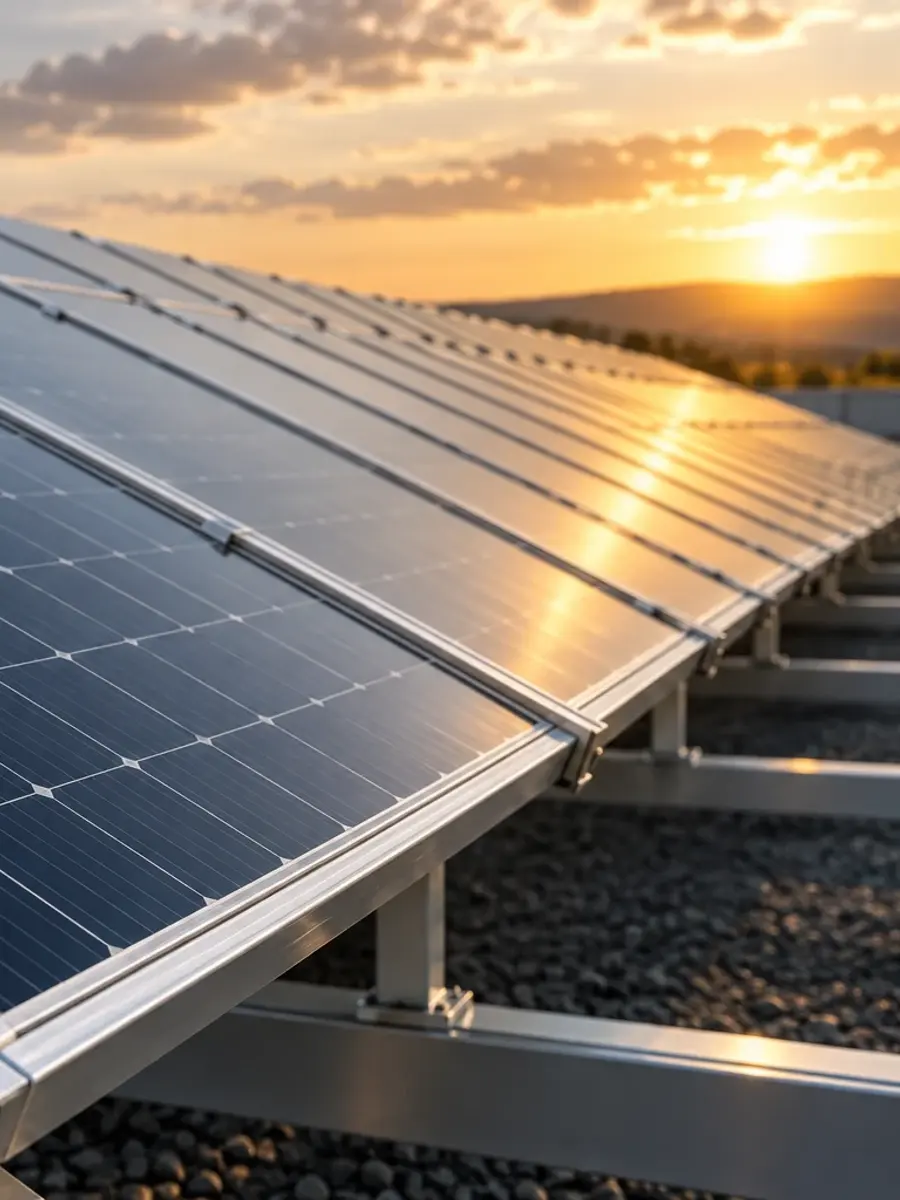
A solar installation is a structure that has to stand outdoors, unmaintained, for two to three decades while carrying wind and snow load. Very few materials are sensible at that brief and that price.
Aluminium frames the module, rails it to the roof or the ground, and clamps it down — and it does so at a weight a rooftop structure can actually take.
Solar & Renewable Energy at a glance
- Governs the choice
- Corrosion behaviour and stiffness across an unmaintained service life
- Usual alloys
- 6005A and 6063, generally T6
- Usual finish
- Anodised, with the coating thickness stated for coastal or industrial air
- Design input
- Wind and snow load, span between fixings, and the fastener standard
Why aluminium suits solar & renewable energy
Twenty-five years outdoors
The oxide layer means a mounting system does not need repainting through its service life. Anodising it deliberately extends that further, which is why module frames are almost universally anodised.
Rooftops have a load budget
On a retrofit, the roof structure was never designed for the array. Aluminium mounting keeps the added dead load within what the building can accept, which is often what makes the project viable at all.
It goes together on site
Rails, clamps and splices bolt together with hand tools. No welding, no site power, no protective coating to make good afterwards — on a field installation that is a real programme saving.
Aluminium sections used in solar & renewable energy
Extruded parts this sector asks for, and the families each one is drawn from.
- Module and panel frames
- Mounting rails and purlins
- Mid clamps, end clamps and splices
- Ground-mount and tracker structures
- Roof hooks and standing-seam clamps
- Cable management along the array
- Inverter mounting and enclosure sections
- Carport and canopy framing
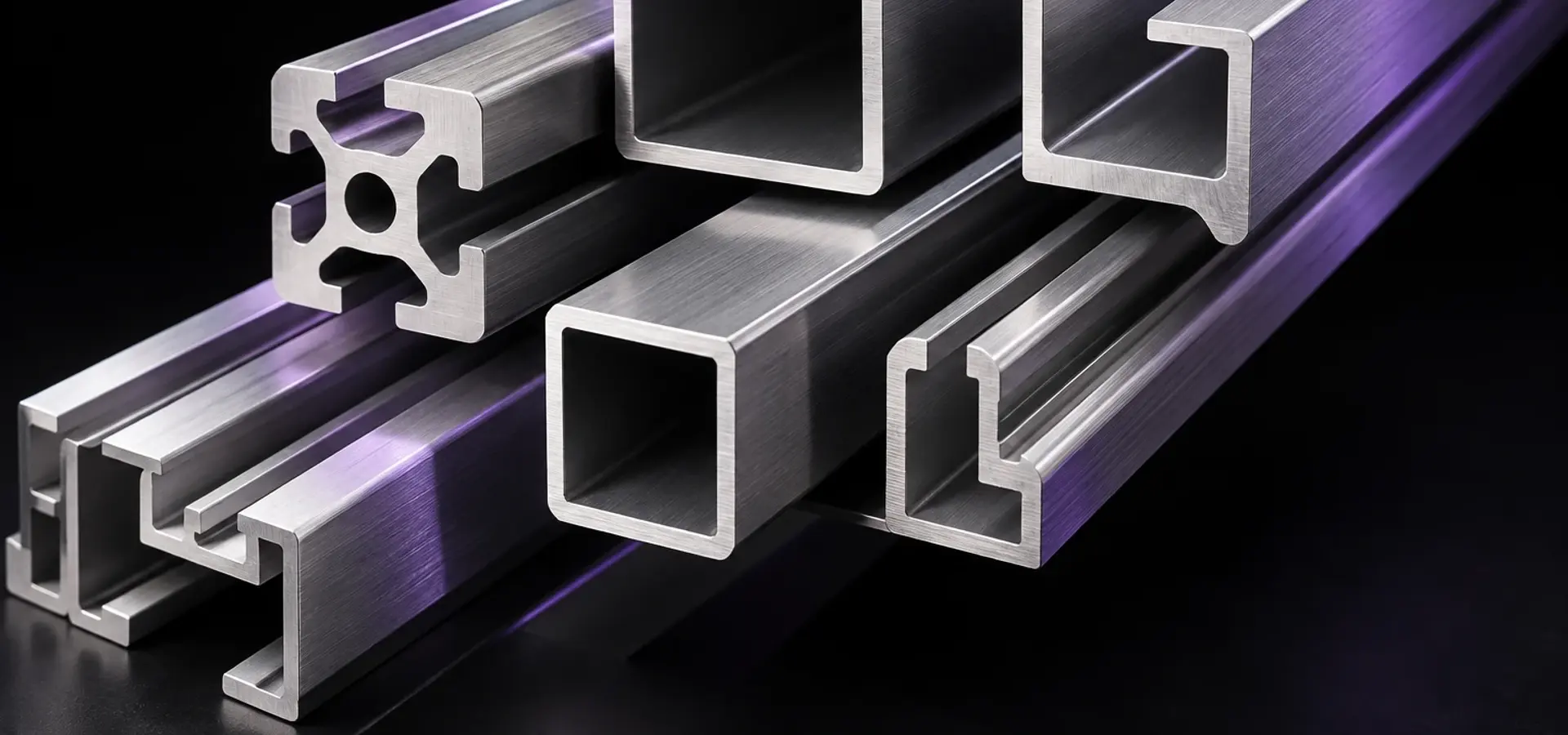
Sections this work draws on
See the full rangeWhat a quote actually depends on
Four answers turn an enquiry into a price. The rest can be worked back from the duty.
- Alloy
- 6005A and 6063 T6 are the usual choices — enough strength for span and wind load, with the corrosion behaviour the service life depends on.
- Finish
- Anodised is the norm. Specify the coating thickness if the site is coastal or industrial, because that is the condition that decides how the surface ages.
- Load case
- Wind and snow load and the span between fixings decide the section, so send those rather than a section size — the right profile falls out of the load case.
- Fixings
- Note which fasteners the rail has to accept. A channel that has to take a standard T-bolt has a defined internal geometry and cannot be substituted freely.
Where these sections go wrong
The load case picks the section
Wind zone, snow load and the span between fixings decide the profile. A rail chosen from a catalogue photograph is the usual reason a mounting system fails its structural check after the array is priced.
Coastal air is a different specification
An anodic film that lasts inland can pit within a few years a kilometre from the sea. Say where the array stands, so the coating thickness is specified rather than assumed.
The fastener has to fit the channel
T-bolt heads are dimensioned to a standard. A channel half a millimetre out of that standard will not accept the bolts, clamps and splices already on site.
Questions this work raises
What buyers specifying solar & renewable energy sections ask before they send a drawing.
6005A and 6063 in T6 are the usual choices: enough strength for the span and the wind load, with the corrosion behaviour the service life depends on. Frames are almost universally anodised rather than left mill or painted.
Module frames commonly run in the ten to fifteen micron range for ordinary inland sites. Coastal, high-humidity and industrial locations are normally specified thicker, because that is the condition that decides how the surface ages. Say where the array stands and the coating gets specified rather than assumed.
The load case, not a section size. Wind zone, snow load, the span between fixings and the fastener standard the rail has to accept between them decide the profile — and a channel that has to take a standard T-bolt has a defined internal geometry that cannot be substituted freely.

Let’s build the right solution for you
Send a drawing, a sample or just the application. We design the die and extrude the profile around it.
Common questions
Yes — that is what the plant was built for. Send a cross-section, a sketch or a sample and we design the die around your application.
The application, the section and the quantity. If you already have a drawing, send the dimensions with it.
Yes. Angles, channels, flat bars, tubes and T-sections, alongside architectural and window sections.
Send a sample or a cross-section of the existing part. Matching an established profile is a die design job like any other.
Access equipment — aluminium ladders, scaffolding and FRP ladders.
Send us your requirement
Name, number and what you need. That is enough to come back to you with something useful.